Planning links updated 11 September 2026 | Our personal trip was in February 2023; the dated 2026 examples below are historical context.
The “best time” to perform Umrah depends entirely on what matters most to you. If spiritual reward is the priority, Ramadan is unmatched. If comfort and manageable crowds are the priority, the cooler winter months (November to February) are ideal. If budget is the deciding factor, compare actual flight and hotel quotes for several dates. A cheaper trip also needs to suit your group’s heat tolerance, schedule and visa conditions.
This guide gives you an honest month-by-month breakdown so you can make the right decision for your situation.
Quick Answer
| Your priority | Timing to compare | Next planning step |
|---|---|---|
| Ramadan visit | Check Ramadan dates for your travel year | Arrange permits |
| Cooler weather | November–January; check local forecasts and holiday demand | Plan your itinerary |
| Budget | Compare live quotes across several dates | Calculate your budget |
| Family trip | Your children’s school holidays | Plan with children |
| Comfort and preparation | Choose dates and a pace that suit your group | Use the packing checklist |
| First Umrah | Allow time for both Madinah and Makkah | Start with our complete guide |
Booking for late 2026 or 2027? Ramadan and Hajj move through the Gregorian calendar. Check the Ministry of Hajj and Umrah’s current seasonal announcements and your visa conditions before choosing dates. A month’s weather does not establish whether your visa permits travel then. Compare actual flight and hotel quotes before deciding which month is cheapest.
Our Experience — February 2023
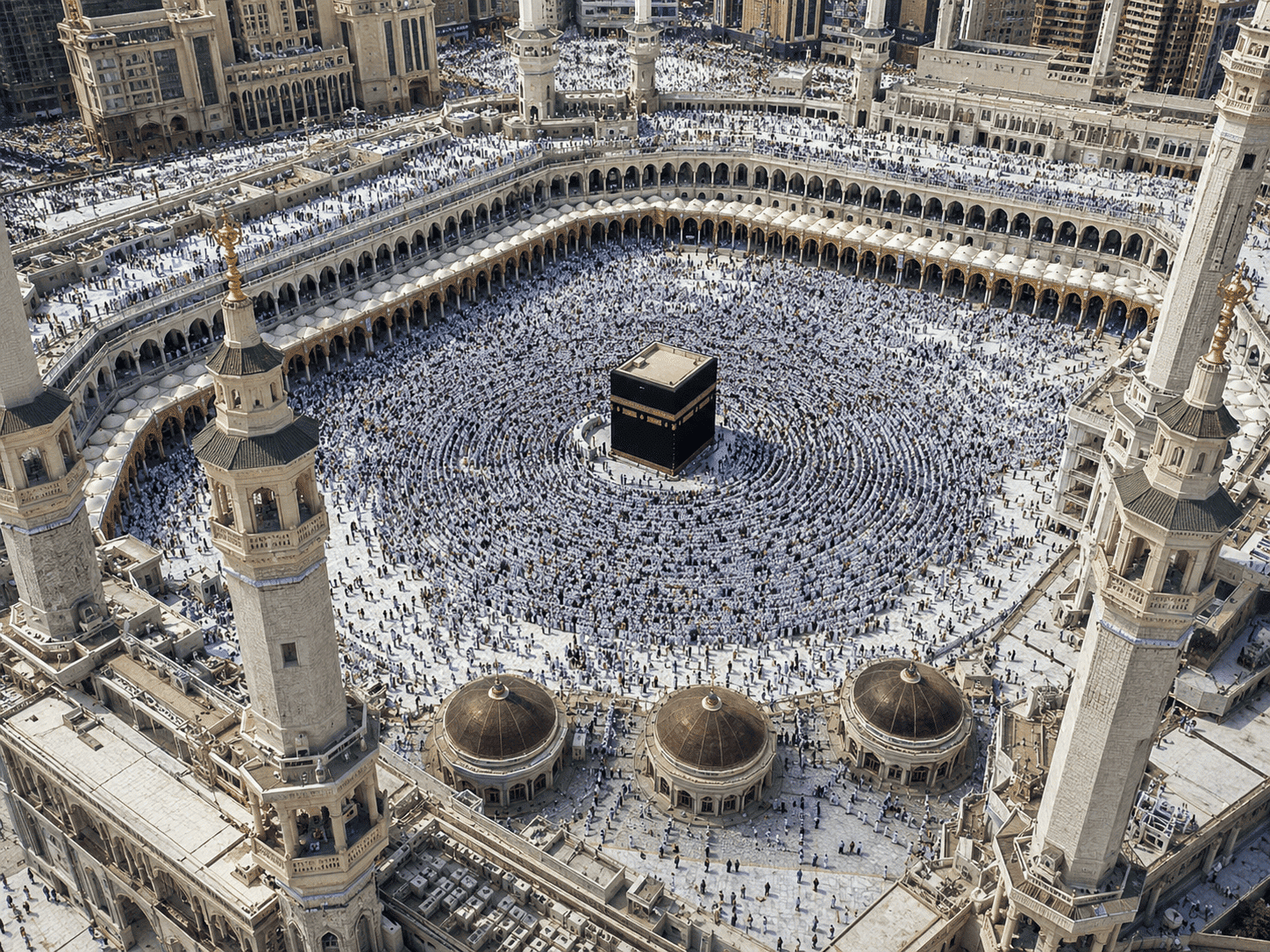
We performed Umrah in February 2023 as a family of three from Bangalore. At the time, February fell during the last days of Rajab and first days of Sha’ban in the Islamic calendar — a blessed period before Ramadan begins.
Weather: Mild. Daytime temperatures in Makkah were around 25-28°C, dropping to 18°C at night. The Tawaf in the open Mataf area was comfortable, even in the middle of the day. Madinah was slightly cooler. This was among the best conditions we could have hoped for.
Crowds: Manageable but not empty. The Haram was busy during prayer times — as it always is — but navigating Tawaf and Sa’i was straightforward. No extreme pushing or overcrowding. The Rawdah in Madinah required a Nusuk booking but slots were available within our preferred timeframe.
Cost: Mid-range. Not the cheapest month, but hotels were reasonably priced. We stayed at the Artal Taiba Hotel in Madinah (SAR 550/night for a triple room) and Land Premium 1 Hotel in Makkah (SAR 265/night for a quad room via Booking.com).
Would we choose February again? Yes, without hesitation. The combination of mild weather, manageable crowds, and reasonable hotel prices made for an experience that was spiritually focused rather than logistically stressful.
Month-by-Month Breakdown
January ⭐⭐⭐⭐⭐ (Highly Recommended)
Weather: Cool and mild — 22-26°C in Makkah, 18-22°C in Madinah. The most comfortable weather of the year for Tawaf and outdoor Ziyarat.
Crowds: Moderate. January falls in the Islamic months of Rajab or Sha’ban (year-dependent) — both blessed months that attract pilgrims, but not at Ramadan levels.
Hotel prices: Mid-range. Not peak (which is Ramadan) but not off-peak either. Book 6-8 weeks ahead for good rates.
Best for: First-time pilgrims, elderly pilgrims, families with young children, anyone who wants a physically comfortable experience.
February ⭐⭐⭐⭐⭐ (Highly Recommended)
Weather: Still cool and pleasant. Can begin to warm toward the end of February. 24-30°C.
Crowds: Depends heavily on whether Ramadan falls in February this year. In 2023, Ramadan began in late March — February was pre-Ramadan with manageable crowds. In some years, Ramadan falls earlier and February becomes extremely busy.
Check the Islamic calendar: Before booking February, verify whether Ramadan falls in this month for your travel year. If it does, see Ramadan section below.
Hotel prices: Similar to January — mid-range.
March ⭐⭐⭐⭐ (Good — but check Ramadan dates)
Weather: Warming up — 28-34°C. Still manageable for most people, though more tiring for Tawaf.
Crowds: If Ramadan falls in March (as it does in 2026), crowds are very high and hotel prices spike 2-3 times the normal rate. If Ramadan has already ended, March offers a calm post-Ramadan period with moderate crowds.
For 2026 specifically: Ramadan in 2026 begins approximately February 18 and ends approximately March 19. The last 10 nights (most sacred) fall in early-to-mid March. This is the most crowded and expensive period of the year.
April ⭐⭐⭐⭐ (Good for families)
Weather: Warming significantly — 32-36°C. Outdoor Ziyarat (Cave Hira, Mount Uhud) becomes more challenging.
Crowds: Post-Ramadan period. Many pilgrims perform Umrah at the end of Ramadan and during Eid — so the immediate post-Ramadan weeks can still be busy. By mid-April, crowds reduce noticeably.
School holidays: April includes spring break for many countries — good for families who need to travel during school breaks.
Hotel prices: Return to mid-range after Ramadan premium subsides.
May ⭐⭐⭐ (Avoid if possible)
Weather: Hot — 36-40°C. The heat becomes a real challenge for outdoor activities and long walks.
Crowds: In 2026, Hajj begins approximately May 25-26. The weeks leading up to Hajj (mid-May onwards) see significant increases in pilgrims. Importantly: Umrah is not performed on 8-13 Dhul Hijjah (Hajj days) — avoid travelling to Makkah for Umrah during this exact period.
Hotel prices: Peak Hajj season pricing begins in mid-to-late May.
June ⭐⭐ (Not recommended)
Weather: Very hot — 38-42°C. Walking between Sa’i, outdoor Tawaf areas, and Ziyarat sites becomes genuinely dangerous without careful hydration management.
Crowds: Post-Hajj. Pilgrims who have just completed Hajj often perform Umrah — so June can be surprisingly busy despite the heat.
Who should consider June: Budget travellers who can handle extreme heat and prioritise cost savings over comfort.
July ⭐⭐ (Best for budget, worst for heat)
Weather: At its most extreme — 39-43°C. The hottest month of the year.
Crowds: Genuinely the lowest crowds of the year. Most pilgrims avoid Makkah in July heat.
Hotel prices: Lowest of the year — 40-60% below Ramadan pricing. This is when budget-conscious pilgrims who don’t mind heat can find extraordinary value.
Who this works for: Young, physically fit pilgrims who can manage the heat with proper hydration (3+ litres of water daily), sunscreen, and by performing outdoor Tawaf only during early morning or night.
August ⭐⭐ (Similar to July)
Same assessment as July. Extreme heat, lowest crowds, lowest prices.
September ⭐⭐⭐ (Slightly better than July-August)
Weather: Begins to cool slightly — 36-40°C. Still hot, but the worst of summer is easing.
Crowds: Still low. Good value window beginning.
Hotel prices: Still at lower end — good deals available.
October ⭐⭐⭐⭐ (Very Good)
Weather: Noticeably cooler — 30-35°C. Outdoor activities become manageable again.
Crowds: Moderate. The season begins picking up as cooler weather returns.
Hotel prices: Beginning to rise from off-peak lows — book in advance.
Who this works for: Pilgrims who want a balance of reasonable prices, manageable crowds, and decent weather.
November ⭐⭐⭐⭐⭐ (Excellent)
Weather: Excellent — 26-30°C. Warm but not hot. Evenings are pleasant.
Crowds: Moderate. One of the best months for a peaceful Umrah experience.
Hotel prices: Mid-range — good value before December uptick.
Best for: Almost everyone. Particularly good for elderly pilgrims and those doing their first Umrah.
December ⭐⭐⭐⭐ (Good — book early)
Weather: Similar to January — cool and comfortable. 22-26°C.
Crowds: Busy. School holidays worldwide mean many families travel in December. Also falls near Islamic new year in some years.
Hotel prices: Higher than November — demand from school holiday travellers drives prices up.
Who this works for: Families tied to school holiday schedules who cannot travel at other times.
Ramadan — The Spiritual Peak
The Prophet ﷺ said: “Umrah in Ramadan is equal to Hajj — or equal to Hajj performed with me.” (Bukhari and Muslim)
This is the single most spiritually significant time to perform Umrah. The atmosphere in Makkah during Ramadan — millions of Muslims fasting together, the Haram alive with Quran recitation at every hour, the extraordinary intensity of the last 10 nights — is an experience that cannot be replicated at any other time.
In 2026, Ramadan begins approximately February 18.
If you can afford it and are physically able — Ramadan Umrah is worth every extra riyal.
However, be prepared for:
- Hotel prices 2-3 times normal rates — book 4-6 months in advance
- Extremely large crowds — the Haram holds millions during Ramadan
- Physical demands of fasting while performing rituals (not required — travellers may break fast, but the spiritual energy of fasting together is part of the experience)
- Iftar and Suhoor times affecting your schedule significantly
The last 10 nights (odd nights — 21st, 23rd, 25th, 27th, 29th of Ramadan) are the most intensely spiritual — and the most crowded. Laylatul Qadr (the Night of Power) falls in this period.
Our Recommendation for First-Time Pilgrims
Choose November, December, January, or February (outside Ramadan).
Your first Umrah should be spiritually focused and physically manageable. Extreme heat (July-August) turns a spiritual journey into a physical endurance test. Ramadan is extraordinary but extremely intense for first-timers.
The winter months give you mild weather, manageable crowds, and reasonable hotel prices — the ideal combination for approaching your first Umrah with the clarity and presence it deserves.
Once you have performed Umrah once and want to experience it at its most spiritually charged, plan a Ramadan visit for the future.
How This Should Affect Your Booking
Book flights: 8-12 weeks in advance for winter months. 4-6 months in advance for Ramadan.
Book hotels: As early as possible for Ramadan. 4-8 weeks ahead for winter months.
Apply for visa: 4-6 weeks before travel for Indian passport holders (through agent). 2-3 weeks for US/UK tourist e-visa.
Related Articles
- How I Self-Booked Umrah for My Family — Complete Guide with Real Costs
- Umrah Cost from USA — Realistic 2026 Budget Breakdown
- Artal Taiba Hotel Madinah — Honest Review
- Land Premium 1 Hotel Makkah — Honest Review
- Complete Umrah Packing List 2026
May Allah give us all the opportunity to perform Umrah in the best of conditions and with the best of intentions. Ameen. 🤲
6 thoughts on “Best Time to Perform Umrah — Month-by-Month Honest Guide”